What If Your Evening Workout Could Feel Like a Warm Hug Instead of a Chore?
Ever finished a long day only to stare at your laptop, dreading the idea of squeezing in a workout? You’re not alone. Many of us struggle to stay active after work—not because we don’t care, but because the routines feel too harsh, too loud, or too demanding when all we want is to unwind. What if your evening fitness moment didn’t drain you, but actually helped you relax, breathe, and reconnect with yourself? What if moving your body at night wasn’t about burning calories, but about releasing the weight of the day? That’s not a fantasy. It’s becoming real for more women who are redefining what fitness means after hours.
The Exhausted But Guilty Cycle: Why Evenings Defeat Our Fitness Goals
Let’s be honest—by 6 PM, your energy tank is often on empty. You’ve managed emails, packed lunches, answered a dozen texts, and maybe even folded a mountain of laundry. Your brain is still buzzing, your shoulders are tight, and the last thing you feel like doing is jumping into a high-intensity routine that demands you keep up with a trainer yelling, “One more set!” That’s not motivation. That’s guilt dressed up as discipline.
So you sit down. Maybe you stretch a little, or scroll through videos hoping something will inspire you. But more often than not, you end up watching someone else move while your own body stays still. And then the guilt creeps in. “I should be doing something,” you think. “I promised myself I’d stay consistent.” But here’s the truth: it’s not that you lack willpower. It’s that the system is working against you. Most fitness advice was built for people with endless energy, not for those of us who are parenting, working, and managing households all at once.
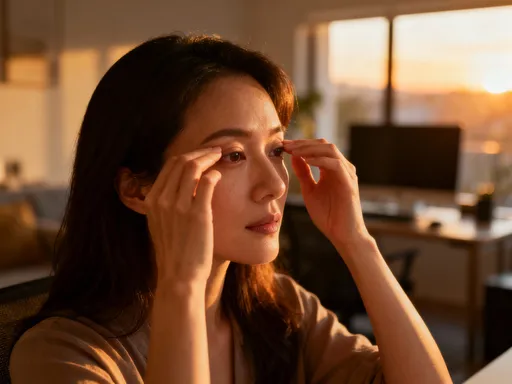
Evening fatigue isn’t just physical—it’s emotional. You’re not just tired from moving. You’re tired from thinking, deciding, and caring. And when you’re in that state, the idea of “pushing through” a workout feels like adding insult to injury. Your body isn’t resisting movement. It’s resisting the wrong kind of movement. What you need isn’t another round of burpees. You need something that meets you where you are—something gentle, quiet, and kind.
How Online Fitness Courses Got Evenings Wrong (Until Now)
Think about the workouts you’ve tried online. Bright studio lights. Upbeat music that feels more like a nightclub than a living room. Instructors with perfect form, counting down seconds like you’re racing against time. These programs work beautifully for someone who wants to wake up energized or break up their afternoon. But for evening? They’re the opposite of calming.
The problem isn’t the workouts themselves—it’s the timing and tone. When your nervous system is already overstimulated, loud cues and fast transitions keep it on high alert. Instead of helping you wind down, they keep you wired. And that’s when exercise stops being self-care and starts feeling like another item on your to-do list—one you’re already behind on.
We’ve been sold the idea that fitness has to be intense to count. That if you’re not sweating, breathing hard, or feeling sore the next day, you didn’t “do it right.” But that mindset doesn’t honor the full spectrum of what movement can do. Especially at night, the goal isn’t to challenge your limits. It’s to release tension, improve circulation, and signal to your body that it’s safe to rest. That’s why so many women are turning away from the “no pain, no gain” model and looking for something softer—something that feels less like a workout and more like a reset.
The shift is happening. More creators are designing programs specifically for the evening mind and body—one that prioritizes breath, mobility, and mindfulness over speed and intensity. And the results? Better sleep. Less stiffness. A deeper sense of peace. Because when fitness aligns with your actual life, it stops being a chore and starts feeling like a gift.
The Quiet Revolution: Gentle, Screen-Friendly Workouts for Real Lives
Imagine this: You press play on a video where the lighting is warm, the music is soft, and the instructor speaks in a calm, reassuring voice. No timers. No countdowns. Just gentle guidance that says, “Move at your pace. Rest when you need to.” This isn’t a dream. It’s the new wave of online fitness—programs designed not just for your body, but for your nervous system.
These are low-impact, breath-centered sessions that last 10 to 20 minutes. Think slow flow yoga with long holds, restorative stretching that targets tight hips and shoulders, or seated mobility drills that you can do in pajamas. The movements aren’t flashy, but they’re powerful. They’re built to release the tension that accumulates from sitting, driving, and carrying the emotional load of the day.
What makes them different isn’t just the exercises—it’s the design. The camera stays close, so you’re not distracted by flashy backgrounds. The instructor uses verbal cues instead of visual timers, so you can close your eyes and still follow along. The pacing is slow, with space between movements so you can actually feel the stretch, not just rush to the next pose. And the language? It’s kind. “Let your body settle.” “There’s no rush.” “This is your time.”
One mom told me she started doing a 12-minute evening stretch after her kids went to bed. “I used to feel guilty if I didn’t do a full workout,” she said. “Now I realize that 12 minutes of moving slowly is doing more for my body than an hour of something I dreaded.” That’s the quiet revolution—fitness that doesn’t shout. It whispers. And in a world that’s constantly demanding your attention, a whisper can be the most powerful sound of all.
Your Living Room, Your Sanctuary: Designing the Ideal Evening Routine
You don’t need a home gym. You don’t need fancy equipment. What you need is a little intention. Creating a space for evening movement isn’t about perfection—it’s about permission. Permission to take up space. To move without judgment. To treat yourself with the same care you give to everyone else in your life.
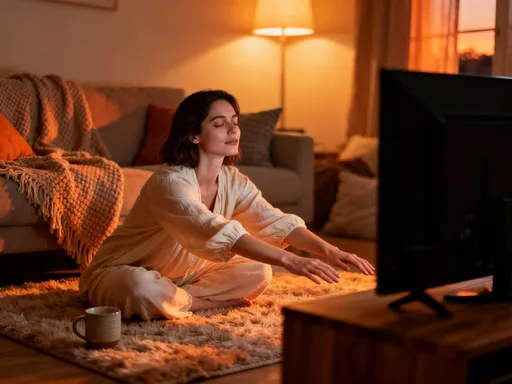
Start small. Dim the overhead lights. Use a floor lamp or string lights to create a soft glow. Put your phone on “Do Not Disturb.” Roll out your mat—or just use a folded blanket on the carpet. Wear something comfortable: soft pants, a loose top, socks if your feet get cold. These aren’t small details. They’re signals to your brain that this time is different. This isn’t another task. This is a ritual.
Now, think about your screen. If you’re following a video, lower the brightness. Too much blue light can interfere with melatonin, the hormone that helps you sleep. Some women like to mirror their tablet or phone onto the TV so they’re not staring at a small, bright screen. Others use headphones with gentle audio guidance so the sound feels personal, not invasive.
The goal is to create an environment where movement feels inviting, not intimidating. You’re not preparing for a performance. You’re preparing to come home—to your body, to your breath, to yourself. One woman shared how she lights a candle and plays the same soft playlist every night before her stretch session. “It’s like my brain knows: this is the signal that the day is ending,” she said. “I don’t have to think about it. I just show up.” And that’s the power of a well-designed routine. It removes the friction. It makes showing up easy.
From Tension to Tranquility: Real Stories of Evening Movement That Sticks
Meet Sarah, a school administrator and mom of two. For years, she tried to squeeze in workouts after dinner—usually a high-energy video she found online. “I’d do it for a few days, then burn out,” she said. “I felt more drained than when I started.” Then she discovered a 15-minute shoulder and neck release routine. No jumping. No fast transitions. Just slow, mindful movements with gentle cues like, “Let the weight of your arms sink down.”
“I did it three times a week at first,” she said. “Now it’s every night. I don’t even think about it. I just roll out my mat and press play.” The changes weren’t dramatic at first. But over time, she noticed her headaches were less frequent, her sleep deeper, and her mood more even. “It’s not that I’m ‘getting in shape,’” she said. “It’s that I feel more like myself.”
Then there’s Maria, a nurse who works 12-hour shifts. “By the time I get home, I’m on my feet for hours,” she shared. “My legs are heavy, my back aches.” She started doing a seated stretching routine while her husband watched TV. “I don’t have to leave the living room. I don’t need special clothes. I just sit on the floor and move slowly.” She noticed her circulation improved, and she stopped waking up with stiff joints.
And James—yes, a dad—who does a five-minute breathing and mobility flow while his kids wind down with books. “I used to think fitness was something I had to do alone, in the garage, with loud music,” he said. “Now I realize I can be present with my family and still take care of myself.” These stories aren’t about transformation in the way magazines show it. There are no before-and-after photos. No dramatic weight loss. But there is relief. There is peace. There is the quiet joy of feeling better in your body, without pushing yourself to the edge.
How to Choose the Right Course Without Wasting Time or Energy
With so many options online, how do you find the ones that truly support your evening needs? Start by asking the right questions. Does the instructor speak in a calm, soothing tone? Is the lighting soft? Is the music gentle, or does it feel like a pop playlist? These details matter more than you think.
Look for programs under 20 minutes. That’s long enough to make a difference, short enough to feel manageable. Avoid anything with strict timers or pressure to “keep up.” Instead, choose videos that offer verbal guidance, like “when you’re ready, slowly shift to the next movement,” rather than a flashing countdown.
Pay attention to the language. Does the instructor say things like “listen to your body” or “honor your pace”? That’s a good sign. Avoid programs that use words like “crush it” or “no excuses”—those are designed for motivation, not relaxation. Evening movement isn’t about discipline. It’s about care.
Also, check if the program allows for modifications. Can you do it seated? In loose clothing? Without getting off the couch? The more flexible it is, the more likely you are to stick with it on tough days. And don’t be afraid to sample a few. Most platforms offer free trials or single-session purchases. Try one tonight. Try another tomorrow. See which one makes you feel more relaxed, not more stressed. Your body will tell you what’s right.
Making It Last: Turning Evening Movement into a Sustainable Habit
The secret to consistency isn’t perfection. It’s flexibility. You don’t have to move every night to benefit. Some days, you’ll do 15 minutes. Others, you’ll rest. And that’s okay. The goal isn’t to build a flawless routine. It’s to build a compassionate one—one that adapts to your energy, your mood, your life.
One of the most powerful ways to make this habit stick is to pair it with something you already enjoy. Brew a cup of chamomile tea and sip it while you move. Light a candle. Journal for five minutes after your stretch. These small rituals create a deeper connection between movement and relaxation. Over time, your brain starts to associate the routine with comfort, not obligation.
And remember: this isn’t about fixing yourself. It’s about honoring yourself. You’re not doing this to lose weight or “get toned.” You’re doing it because your body carries you through every single day—and it deserves kindness. When you move gently at night, you’re not just improving flexibility or circulation. You’re sending a message: “I see you. I care for you. You matter.”
That’s why so many women find that their relationship with their bodies begins to shift. They stop seeing their bodies as problems to fix and start seeing them as allies to nurture. And that change? It ripples into everything—how you sleep, how you feel, how you show up in your life.
So tonight, don’t ask yourself, “Do I have time to work out?” Ask, “Do I have 10 minutes to care for myself?” Press play on something soft. Dim the lights. Let your breath lead the way. Let movement feel like a warm hug, not a demand. Because you’re not just building a habit. You’re building a life where you feel more at home—in your body, in your home, in your skin.