Lost in the Clouds: Hiking to Neuschwanstein’s Hidden Wild Side
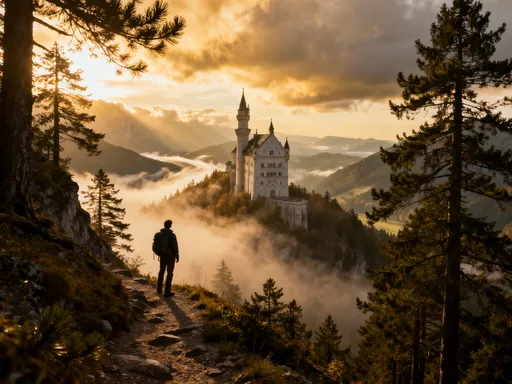
Have you ever walked through a forest so quiet you could hear your heartbeat? I stumbled upon a side of Neuschwanstein Castle most tourists never see—not from the crowds below, but from the misty trails above. Towering pines, sudden mountain clearings, and that fairy-tale castle peeking through the fog—it felt like stepping into a dream. This isn’t just a visit to a landmark; it’s a journey through Bavaria’s wild soul. Far from the tour buses and ticket lines, a network of alpine paths reveals a quieter, more intimate version of this world-famous destination. Here, nature speaks in whispers, the air carries the scent of damp earth and pine, and every turn offers a new vista of raw, untamed beauty. This is not passive tourism. It is immersion.
The Road Less Taken: Why Hiking Changes Everything
Most visitors approach Neuschwanstein Castle along the paved, postcard-perfect path from Hohenschwangau, a gentle ten-minute walk past a charming duck pond and a ticket center bustling with families and tour groups. The view is undeniably beautiful—stone turrets rising above a canopy of green, reflected in still waters. But this experience, while accessible, is also curated and condensed. It delivers the image, but not the essence. The true transformation begins when you step off the main route and into the hills.
Hiking to Neuschwanstein shifts the entire narrative. Instead of arriving as an observer, you become a participant in the landscape. The journey itself becomes the story. As you climb, the sounds of the village fade. The air grows cooler, thinner, carrying the crisp scent of alpine spruce and wild thyme. The elevation changes are subtle but significant—each hundred meters gained rewards you with a broader perspective. From above, the castle no longer appears as a standalone spectacle. It becomes part of a larger, living tapestry—a human creation nestled within a natural world that dwarfs it in age and scale.
This shift in perspective is profound. You begin to understand the isolation that drew King Ludwig II to this remote corner of Bavaria. The castle was not built for convenience, but for retreat—a refuge from the pressures of monarchy and modernity. From the hiking trails, you see what he saw: vast forests stretching to the horizon, the shimmer of Forggensee in the distance, and the protective embrace of the Alps. The experience is no longer about photographing a monument. It is about feeling the solitude, the grandeur, and the quiet power of a place shaped by glaciers, wind, and time. Memory is not made in minutes; it is earned in steps.
Trailhead Secrets: Where to Start Your Journey
To truly discover the hidden side of Neuschwanstein, you must begin where most tourists do not. The official entrance offers ease, but the nearby villages of Schwangau and Pöllatschlößchen provide access to trails that are quieter, steeper, and far more rewarding. These starting points may require a short drive or bike ride from the main parking areas, but the trade-off is solitude and a deeper connection to the region’s natural rhythm.
One of the most scenic routes begins in Pöllatschlößchen, a cluster of traditional Bavarian homes nestled beside the rushing Pöllat River. From here, the trail follows the river upstream through the dramatic Pöllat Gorge. Wooden footbridges cling to sheer rock faces, suspended above foaming waterfalls that echo through the narrow canyon. The sound is constant—a roar that drowns out thought and pulls you into the present moment. After about 45 minutes of steady climbing, the gorge opens into a high alpine meadow, where wildflowers bloom in spring and early summer, and the first distant views of Neuschwanstein appear through the trees.
Another excellent option starts near the Hohenschwangau Palace and winds through the Tannenwäldchen forest—a dense pine and beech woodland known for its peaceful clearings and filtered sunlight. This path is slightly longer but less steep, making it ideal for families or those preferring a more gradual ascent. The trail is well marked with yellow diamond symbols, the standard for Bavarian hiking routes, and features regular signposts with distances and estimated hiking times. Both routes converge near the Marienbrücke, the famous bridge offering the classic view of the castle, but arriving on foot after a hike makes the moment feel earned, not expected.
Typical hikes range from 4 to 7 kilometers one way, with elevation gains between 250 and 400 meters. While not technically difficult, they require a moderate level of fitness, especially on the return descent, which can be hard on the knees. The trails are maintained year-round, but snow and ice can make them hazardous in late autumn and winter. For most travelers, the ideal window is from late May to early October, when the weather is stable and the paths are clear.
Nature’s Cathedral: The Alpine Wonders Along the Way
The true magic of hiking to Neuschwanstein lies not in the destination, but in the journey through what can only be described as nature’s cathedral. These high trails traverse a landscape sculpted by ancient glaciers, where valleys were carved over millennia and forests have reclaimed their dominion. Every turn offers a new tableau of alpine beauty—meadows dotted with blue gentians and delicate edelweiss, rocky outcrops with panoramic views of the Ammergau Alps, and streams so clear you can see every pebble on the riverbed.
In the early morning, especially during summer, the valleys fill with thick fog that moves like slow rivers through the trees. As the sun rises, it burns through the mist, revealing the castle towers like apparitions. This ethereal quality—half seen, half imagined—adds to the fairy-tale atmosphere that defines the region. But this is not fantasy. It is geology, climate, and ecology working in harmony.
The flora and fauna along the trails are a testament to the area’s ecological richness. Ancient beech forests, some trees centuries old, stand in quiet dignity. Red deer are often spotted at dawn or dusk, moving silently through the underbrush. Golden eagles circle high above, riding thermal currents with effortless grace. Birdsong fills the air—woodpeckers drumming on trunks, finches flitting between branches, and the occasional call of a distant owl. These are not staged encounters. They are the rhythms of a living, breathing wilderness.
Spring brings a burst of color—crocuses, snowdrops, and alpine anemones pushing through the last remnants of snow. By midsummer, the meadows are a tapestry of purple, yellow, and white. Even in autumn, the landscape glows with golden larch trees and crimson berries. Each season offers a different face of the same wild heart. Hikers are not just passing through. They are walking through time—through layers of natural history that predate the castle by thousands of years.
The Castle from Afar: Seeing Neuschwanstein in Context
When you approach Neuschwanstein from the official path, it looms large and immediate—a grand stage set designed for admiration. But when you see it from the high trails, the experience is entirely different. The castle does not dominate the landscape. It belongs to it. Perched on a rugged limestone spur, it rises organically from the rock, its towers echoing the peaks around it. From vantage points like the Marienbrücke, reached only after a climb, the castle is framed by pine trees and mountain ridges, as if nature itself has curated the view.
This perspective changes everything. You begin to see the castle not as an escape from reality, but as a response to it. King Ludwig II did not build Neuschwanstein in defiance of nature, but in dialogue with it. His vision was romantic, yes, but also deeply rooted in the Bavarian landscape—the myths, the mountains, the isolation. From above, you understand his longing for a world untouched by industrialization, a realm where poetry and nature reigned.
The hike reveals what the tourist route cannot: the castle’s vulnerability. Surrounded by forest and sky, it looks less like a fortress and more like a dream suspended in air. On foggy days, the towers disappear into the mist, reappearing only as ghostly outlines. This impermanence, this fragility, makes the experience more poignant. It is not just a monument to a king’s imagination. It is a symbol of humanity’s fleeting presence in an ancient, enduring world.
Photographs taken from the trails rarely match the postcards. They are less polished, more atmospheric. But they carry something the official images do not—a sense of discovery, of quiet awe. Because here, the castle is not just seen. It is felt.
Gear, Timing, and Smart Choices: Hiking Prepared
Even for moderate hikers, preparation is essential. The Bavarian Alps are beautiful, but they are also unpredictable. Weather can shift rapidly—bright sunshine in the morning can give way to cold rain or even hail by afternoon. What begins as a gentle climb can feel exhausting without the right gear. Proper footwear is non-negotiable. Sturdy hiking boots with good ankle support and grip are necessary, especially on wet or rocky sections of the trail.
Layering is key. Mornings can be chilly, even in summer, and temperatures drop at higher elevations. A moisture-wicking base layer, a warm fleece or insulated jacket, and a waterproof outer shell will keep you comfortable no matter the conditions. A wide-brimmed hat and sunglasses protect against sun exposure, while a small backpack allows you to carry essentials without strain.
Every hiker should carry at least one liter of water, especially in warmer months. While some trails pass natural springs, these are not always safe to drink without filtration. Energy-rich snacks—nuts, dried fruit, granola bars—help maintain stamina on the ascent. A physical map or offline trail app is recommended, as cell service can be spotty in the valleys. Don’t rely solely on digital navigation.
The best time to hike is from late spring to early autumn. June and September are ideal—fewer crowds, pleasant temperatures, and blooming flora. Mornings offer the best light for photography and the greatest chance of solitude. Afternoon hikes often coincide with tour groups arriving by bus, making the final approach to the castle more crowded.
One of the most common mistakes is underestimating the return journey. The descent may seem easier, but it is hard on the knees and can be slippery on wet stone steps. Take your time. Use trekking poles if needed. And remember: the goal is not speed. It is presence. Arrive tired, but fulfilled.
Beyond the Brochures: Local Life and Quiet Corners
Away from the castle gates, the region pulses with quiet authenticity. This is not a theme park. It is a living landscape, home to farmers, artisans, and families who have lived here for generations. In the village of Schwangau, small family-run inns serve hearty Bavarian fare—warm pretzels with mustard, käsespätzle (cheese noodles), and apple strudel fresh from the oven. The smell of roasting meat and baked goods drifts through the air, mingling with the scent of pine.
On the high meadows, farmers still tend their cows, their bells echoing across the valleys in the late afternoon. Church spires rise above the treetops, and on Sundays, the sound of hymns drifts on the wind. These are not performances for tourists. They are the rhythms of daily life, unchanged by time.
Some of the most memorable moments happen by chance. A woodcarver working in his garden, sanding a wooden deer with careful hands. A shepherd leading his flock down a forest path, nodding in quiet greeting. A grandmother selling homemade jam at a roadside stand, her smile as warm as the sun. These interactions are brief but meaningful. They remind you that this place is not just a destination. It is a home.
Even the inns reflect this authenticity. Many are family-owned, with wooden beams, checkered tablecloths, and menus written in careful script. The service is unhurried. Conversations happen in German and Bavarian dialect. You are not rushed. You are welcomed. And in that welcome, you taste the real Bavaria—generous, rooted, and deeply human.
Why This Hike Stays With You: The Lasting Impression
Most visits to famous landmarks end with a photo, a postcard, and a quick return to the next stop on the itinerary. But the hike to Neuschwanstein is different. It lingers. It stays with you in the quiet moments—when you pour a cup of tea in the morning, or walk through a city park, or close your eyes and remember the sound of wind in the pines.
It is the silence between footsteps. The sudden sight of mist curling around ancient towers. The way the mountains seem to hold you, just for a moment, in their vast embrace. This is not just a physical journey. It is an emotional one. In a world of fast travel and crowded attractions, this trail offers something rare: presence. The chance to slow down, to breathe deeply, to feel connected—to nature, to history, to something timeless.
The castle is beautiful, yes. But the true wonder is the journey itself. It reminds us that the most meaningful experiences are not handed to us. They are earned. With every step, every climb, every pause to catch your breath and take in the view, you are not just seeing a place. You are becoming part of it.
And when you finally stand on the Marienbrücke, looking at Neuschwanstein through the veil of morning fog, you understand something King Ludwig knew long ago: the most beautiful dreams are those that grow from the earth, shaped by wind and water, held by mountains, and touched by silence. That is the wild soul of Bavaria. And for a few quiet hours, you have walked within it.