Salt Flats and Slow Strolls: Where Uyuni’s Soul Lives in Its Markets
You know that feeling when a place just slows you down—like the world hits pause? That’s Uyuni, Bolivia. Beyond the mirror-like salt flats, I discovered something unexpected: the heartbeat of this remote town pulses in its quiet market stalls, family-run shops, and handmade crafts. Slow travel here isn’t just about lingering—it’s about connecting. And trust me, the real magic isn’t in the photos. It’s in the hands that weave alpaca wool and the smiles behind tiny storefronts.
The Rhythm of Slow Travel in a Remote Desert Town
Uyuni is often seen as a gateway—a brief stopover before boarding 4x4 trucks for sunrise over the Salar de Uyuni, the world’s largest salt flat. But when travelers rush through town without pausing, they miss the quiet pulse of daily life that defines this high-altitude desert community. At 3,656 meters above sea level, everything moves a little slower, and that’s by design. The thin air demands patience. The climate—crisp mornings, blinding midday sun, and cold, star-filled nights—invites mindfulness. Here, time isn’t measured in itineraries but in kettle whistles, the clack of looms, and the soft hum of Quechua spoken between neighbors.
Slow travel in Uyuni means stepping off the tour bus and into the rhythm of the town. It means noticing how shopkeepers sweep their doorsteps at dawn, how children walk to school in thick wool coats, and how elders sit outside their homes, wrapped in colorful shawls, watching the day unfold. This isn’t a destination to conquer; it’s a place to inhabit. When you allow yourself to linger, the town reveals its layers—not just its geography, but its generosity, resilience, and deep-rooted traditions. The salt flats may take your breath away, but it’s the human moments in Uyuni’s streets that stay with you.
Unlike the choreographed tours that whisk visitors across the blinding white expanse of the Salar, life in the town unfolds at its own pace. There’s no rush, no loudspeaker announcements, no timed entries. Instead, there’s a quiet dignity in the way people go about their days—tending to animals, mending clothes, preparing meals with care. For the mindful traveler, this is where transformation begins: in the stillness, in the ordinary, in the unscripted conversations that arise when you’re not looking for them.
Markets as Cultural Crossroads: The Heartbeat of Uyuni
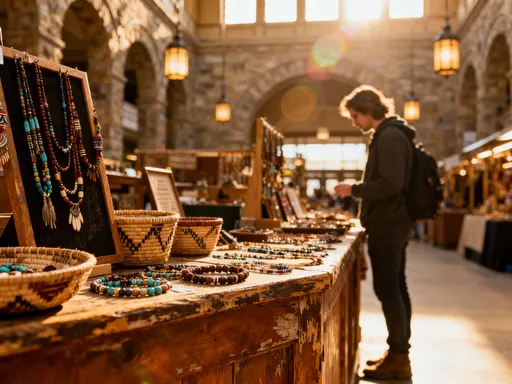
If Uyuni has a soul, it lives in its markets. The main market, tucked behind low adobe buildings near the town center, is not a tourist bazaar but a living, breathing hub of local life. This is where families come to buy food, where elders trade stories while selecting herbs, and where artisans display generations of knowledge in every stitch and carving. The air is rich with the scent of toasted quinoa, simmering stews, and the earthy aroma of dried llama meat. Brightly colored textiles drape over wooden tables, and baskets overflow with medicinal plants, hand-ground spices, and fresh potatoes grown in the nearby highlands.
More than a place to shop, the market is a cultural crossroads. Vendors aren’t just selling goods—they’re sharing identity. A woman arranging handwoven belts might explain how the patterns represent her family’s ancestral village. A man selling ceramic salt dishes might describe how his ancestors harvested salt from the flats long before tourism existed. These interactions are not performances for tourists; they’re expressions of pride and continuity. Every item has a story, and every story is tied to the land, the climate, and the centuries-old traditions of the Andean people.
For travelers, the market offers a rare opportunity to witness resilience in action. Life at this altitude is demanding. Resources are scarce, winters are harsh, and economic opportunities limited. Yet the market thrives—not through luxury or excess, but through ingenuity and community. People trade, barter, and support one another. A grandmother might sell extra wool from her family’s alpacas to buy medicine for her grandson. A young woman might use income from her embroidery to send her younger siblings to school. In these exchanges, you see the quiet strength of a culture that values connection over convenience.
Handmade Treasures: What You’ll Find (And Why It Matters)
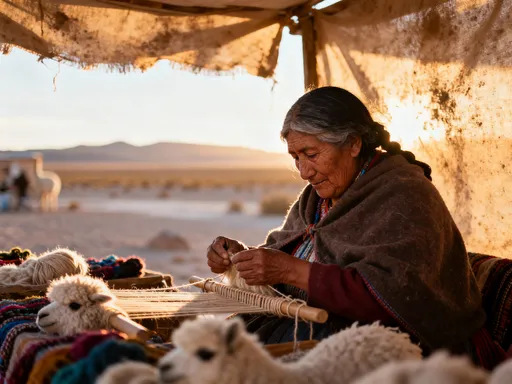
Among the most cherished items in Uyuni’s markets are the handmade textiles. Alpaca wool, soft and warm, is spun into scarves, hats, gloves, and full-length ponchos. These aren’t mass-produced souvenirs—they’re crafted by hand, often using techniques passed down from mother to daughter for generations. The process itself is a ritual: shearing the animals, cleaning the wool, dyeing it with natural pigments from plants and minerals, and weaving it on traditional backstrap looms. Each piece carries the care of its maker, and often, a symbolic meaning. Geometric patterns may represent the mountains, the stars, or spiritual beliefs tied to Pachamama, or Mother Earth.
Equally striking are the aguayos—colorful, rectangular woven cloths used for carrying goods, babies, or as ceremonial offerings. Their intricate designs are more than decorative; they are maps of identity, indicating a weaver’s region, community, or family lineage. When you purchase an aguayo, you’re not just buying fabric—you’re honoring a living tradition. The same is true for ceramic salt dishes, hand-carved from local clay and fired in small outdoor kilns. These pieces are functional and beautiful, made using methods that predate modern industry.
Buying directly from artisans has a ripple effect. It ensures fair compensation for skilled labor, supports local economies, and helps preserve cultural heritage. In contrast, mass-produced imitations—often made in factories far from Bolivia—undermine these values. They may look similar, but they lack soul. By choosing handmade, travelers contribute to sustainability in its truest sense: economic, cultural, and environmental. You’re not just taking home a memento—you’re helping keep a tradition alive.
Hidden Shopping Spots Off the Tourist Path
Beyond the central market, Uyuni holds quieter, lesser-known spaces where craftsmanship thrives away from the crowds. Tucked down narrow side streets, you’ll find family-run workshops where grandmothers teach their grandchildren to spin wool. In modest storefronts, women’s weaving collectives gather to work and share stories. These spaces aren’t listed in guidebooks, and they don’t have English-language signs. But they’re where the most authentic experiences happen.
One such place is a small cooperative on Calle Abaroa, where a group of women from nearby rural communities come together to weave, sell, and support one another. Here, visitors are welcomed not as customers but as guests. A cup of coca tea is offered, and conversations unfold slowly. You might watch a woman weave a scarf using a centuries-old technique, her fingers moving with quiet precision. There’s no pressure to buy—just the invitation to observe, to listen, to be present.
Finding these spots often requires curiosity and a willingness to wander. A local guide can help, but so can a simple smile and a few words in Spanish. Sometimes, the best discoveries come from following the sound of a loom or the scent of freshly baked pastel de papa, a traditional potato pie. These hidden places remind us that travel is not just about seeing landmarks, but about encountering lives lived with purpose and pride.
How to Shop Responsibly and Respectfully
Shopping in Uyuni’s markets is more than a transaction—it’s an exchange of respect. To honor the people behind the crafts, travelers should approach these interactions with humility and awareness. A few basic Spanish phrases go a long way: ¿Cuánto cuesta? (How much does it cost?), Gracias (Thank you), Es muy bonito (It’s very beautiful). These small efforts show that you value the person, not just the product.
When it comes to pricing, it’s important to understand that low prices don’t always mean fair ones. Many artisans earn barely enough to cover materials and time. Paying a fair price—sometimes slightly above what’s quoted—is an act of solidarity. Bartering is common in markets, but it should be done with care. In tourist-heavy areas, some vendors expect negotiation. But in small cooperatives or family workshops, fixed prices are often set to ensure dignity and consistency. If in doubt, ask politely or follow the lead of locals.
Photography is another area that requires sensitivity. Always ask permission before taking photos of vendors or artisans. A simple ¿Puedo tomar una foto? and a smile can open a door to connection. But never treat people as props. These are not performances; they are livelihoods. When you photograph with respect, you honor the work and the person behind it.
Finally, remember that your presence matters. By choosing to support local artisans, you’re voting with your wallet for a more ethical kind of tourism—one that values people over profit, authenticity over convenience, and connection over consumption.
Slow Travel in Action: A Day in the Life of a Mindful Shopper
Imagine starting your day at sunrise with a warm cup of api morado, a sweet purple corn drink sold by a vendor on the corner. The sky is still dusky, but the market is beginning to stir. Wooden shutters creak open. Steam rises from pots of soup. As you walk through the alleys, vendors greet you with quiet nods. One woman offers a sample of dried quinoa, explaining how it’s grown in the high plains. Another invites you to feel the difference between baby alpaca wool and regular wool—softer, warmer, more precious.
Later, you stop at a small stall where an elderly woman sits spinning wool with a drop spindle, a technique used for thousands of years. She doesn’t speak much Spanish, but her granddaughter translates. She tells you she learned to spin from her mother, who learned from hers. As you watch, the wool twists into a fine, even thread. You buy a pair of hand-knit gloves, not because you need them, but because you want to honor her skill.
In the afternoon, you visit a women’s collective where ten artisans are working on a large tapestry. They’re laughing, sharing lunch, passing around a thermos of coca tea. One woman explains that the design tells the story of their community’s migration decades ago. You sit with them for an hour, not buying anything, just listening. The sun moves across the room, lighting up the vibrant threads. There’s no rush. No agenda. Just the simple joy of being together.
This is slow travel in its purest form. It’s not about ticking off sights or capturing the perfect photo. It’s about presence. It’s about allowing a place to reveal itself in its own time, through its people, its rhythms, its quiet moments of grace.
Why These Moments Stay With You—Long After the Trip
Years from now, you may forget the exact shade of the salt flats at sunset. But you’ll remember the woman who taught you how to spin wool. You’ll remember the taste of coca tea shared in silence. You’ll remember the pattern on a scarf and the story behind it. These small exchanges—brief, unscripted, human—become the anchors of memory. They’re not loud or dramatic, but they’re deep.
Shopping in Uyuni, when done with intention, becomes more than retail. It becomes storytelling. It becomes relationship. It becomes a way of seeing the world more clearly—not as a collection of destinations, but as a web of lives, each with its own dignity and beauty. These experiences cultivate gratitude. They remind us that travel is not about taking, but about giving—attention, respect, time.
More than that, they change how we move through the world. The lessons of Uyuni—slowness, humility, connection—stay with us long after we return home. We begin to see our own communities differently. We value craftsmanship. We listen more. We slow down. And in that slowness, we find a deeper kind of richness.
So when you go to Uyuni, don’t just chase the mirror skies. Step into the market. Sit with a vendor. Buy a scarf, not for the photo, but for the story. Travel not just with your eyes, but with your heart. Because the true soul of a place isn’t in its landscapes—it’s in its people, in their hands, in their quiet, enduring grace.