You Won’t Believe These Hidden Gems in Durban
Durban’s skyline is a visual story of cultures colliding and styles blending—colonial facades meet Indian-inspired rooftops, and modern steel structures rise beside historic Zulu-influenced designs. I wandered the streets with my camera, not just chasing beauty, but trying to understand how architecture here tells the city’s soul. What I found wasn’t just photogenic corners—it was identity carved in stone, paint, and ironwork. If you're into real, raw urban aesthetics, Durban’s architectural heartbeat is impossible to ignore.
The Coastal Contrast: Architecture Meets the Indian Ocean
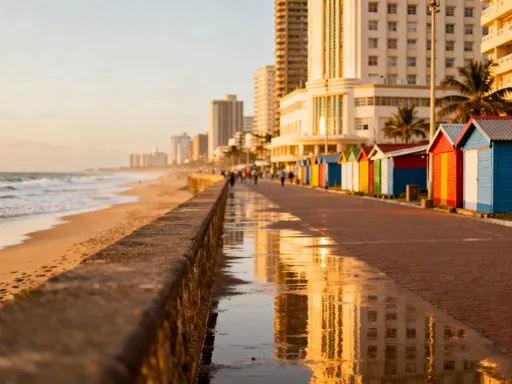
Durban’s identity is inseparable from its relationship with the Indian Ocean. The coastline shapes not only the city’s climate but also the character of its built environment. Along the Golden Mile, a stretch of beachfront promenade that draws both locals and visitors, architecture balances function and flair in equal measure. Art Deco hotels from the early 20th century stand as enduring testaments to a glamorous era of seaside leisure. These buildings, with their curved balconies, pastel facades, and rhythmic column patterns, were designed to catch ocean breezes and offer panoramic sea views. Their design prioritized natural ventilation long before sustainability became a buzzword, with high ceilings, louvered windows, and shaded verandas that keep interiors cool despite the subtropical heat.
Further down the coast, a different kind of architectural expression emerges in the informal settlements that line parts of the shore. Here, creativity thrives under constraint. Homes built from corrugated metal, repurposed wood, and salvaged materials are painted in electric pinks, blues, and yellows—colors that reflect both cultural vibrancy and personal pride. These structures may lack formal planning, but they demonstrate an intuitive understanding of coastal living. Elevated foundations protect against flooding, angled roofs deflect strong sea winds, and shared alleyways create micro-communities within the larger urban fabric. The contrast between the polished Art Deco facades and the improvised brilliance of township housing forms a visual dialogue between order and spontaneity.
For photographers and architecture enthusiasts, this coastal stretch offers unmatched variety. Early morning light softens the edges of the older hotels, casting long shadows that emphasize their geometric elegance. Meanwhile, the informal settlements come alive in midday sun, when colors pop against the bright sky and the ocean glimmers in the background. The promenade itself, with its arc of streetlights, benches, and kiosks, adds a rhythmic continuity to the scene. Whether captured in wide-angle cityscapes or tight details of peeling paint and weathered ironwork, Durban’s coastal architecture tells a story of adaptation, resilience, and beauty born from necessity.
Colonial Echoes in the City Center
At the heart of Durban’s urban core lies a collection of buildings that speak to its colonial past. Constructed during the late 19th and early 20th centuries under British rule, these structures were designed to project authority, permanence, and civic order. The Durban City Hall, completed in 1910, stands as one of the most iconic examples. Built from sandstone with a copper dome and clock tower inspired by the Victoria Tower at the Palace of Westminster, it evokes the grandeur of imperial architecture. Its symmetrical façade, arched colonnades, and intricate stonework reflect a desire to transplant European elegance onto African soil. Today, it remains a functioning municipal building and a protected heritage site, its presence a reminder of a complex historical legacy.
Other colonial-era landmarks include the Old Post Office, the Natal Bank Building, and the former Supreme Court, all clustered within a few blocks of the city center. These buildings share common features: load-bearing masonry walls, deep-set windows, ornamental cornices, and materials chosen for durability in the humid climate. Many were constructed using locally quarried stone, giving them a warm, earthy tone that changes subtly with the light. While their architectural language is undeniably European, their adaptation to Durban’s environment reveals a pragmatic evolution. Verandas were extended, courtyards were added for airflow, and thick walls helped regulate indoor temperatures—modifications that show how colonial design gradually responded to local conditions.
In recent decades, urban renewal initiatives have sought to preserve these historic structures while integrating them into a modern cityscape. Some buildings have been repurposed as museums, cultural centers, or boutique offices, breathing new life into aging facades. The City Hall now hosts concerts and exhibitions, its grand interior echoing with music rather than parliamentary debate. Preservation efforts, however, face challenges, including maintenance costs and competing development interests. Still, walking through the central business district at golden hour—when the sun slants across the sandstone walls and the clock tower casts a long shadow—offers a moment of quiet reflection. These buildings may no longer represent political power, but they remain powerful symbols of Durban’s layered history, their dignity intact despite the passage of time.
Indian Influence in Victoria Street’s Skyline
Just a short walk from the colonial center, Victoria Street presents a dramatic shift in architectural tone. This bustling corridor is the cultural and commercial heart of Durban’s Indian-South African community, one of the largest outside of India. The skyline here is defined by domes, minarets, and temple towers that rise above markets, spice shops, and fabric stores. The Juma Mosque, with its twin onion domes and arched entrance, stands as a landmark of Islamic architecture in the city. Nearby, the Sri Mariamman Temple—South Africa’s oldest Hindu temple—displays a towering gopuram adorned with brightly painted deities and mythological figures. Each element of these structures, from the curvature of the domes to the intricate stucco carvings, reflects centuries-old design traditions brought from South Asia and adapted to a new context.
The surrounding buildings amplify this sensory richness. Shopfronts are painted in deep reds, saffron yellows, and emerald greens, their signage written in Tamil, Hindi, and English. Wrought-iron balconies overflow with potted plants, and awnings stretch across narrow streets, creating a canopy of color and texture. The architecture here is not static; it evolves with the rhythm of daily life. Temporary stalls appear at dawn, folding shut at dusk, while renovations and repairs happen continuously, often blending traditional motifs with modern materials. This dynamic quality makes Victoria Street a favorite among street photographers, who seek to capture not just buildings, but the living culture within and around them.
Respectful observation is essential when photographing in this area, particularly near active places of worship. Visitors are encouraged to dress modestly, remove shoes before entering temples, and avoid photographing prayer services without permission. Many religious sites welcome visitors during non-service hours, offering guided tours that explain both the spiritual significance and architectural details. For those with an eye for composition, the interplay of light and shadow in narrow alleys, the symmetry of temple gateways, and the contrast between ancient symbols and modern life provide endless inspiration. Victoria Street is not just a place to see architecture—it is a place to experience how design, faith, and community intertwine.
The Rise of Modernism: Glass, Steel, and Urban Growth
As Durban has grown into a major economic hub of KwaZulu-Natal, its skyline has begun to reflect a new architectural era. The rise of modernist and postmodern structures signals a shift toward urban density, commercial ambition, and technological integration. One of the most prominent examples is the Gateway Theatre of Shopping in Umhlanga, a mixed-use complex that combines retail, dining, entertainment, and office space under one vast roof. Its glass façades, sweeping curves, and LED-lit exteriors represent a stark contrast to the masonry and ornamentation of older districts. Inside, open atriums, escalator bridges, and skylights create a sense of vertical movement and spatial grandeur, designed to keep visitors engaged and immersed.
Beyond shopping centers, high-rise office towers and luxury apartments are reshaping the city’s silhouette. These buildings often feature energy-efficient glazing, solar shading systems, and smart climate controls—features that respond to both environmental concerns and the demands of contemporary business. Their designs prioritize clean lines, reflective surfaces, and geometric simplicity, drawing inspiration from global trends in urban architecture. Yet, some architects are beginning to incorporate subtle nods to local identity, such as patterns inspired by Zulu basket weaving embedded in metal screens or color palettes that echo the coastal landscape.
From a photographic standpoint, these modern structures offer unique opportunities. The reflective glass surfaces capture distorted images of the sky, clouds, and surrounding buildings, creating abstract compositions. At sunrise and sunset, the towers glow with warm hues, their angular forms cutting sharp silhouettes against the horizon. Elevated viewpoints—such as the viewing deck at Gateway or rooftop restaurants in the city center—provide panoramic perspectives that showcase the contrast between old and new. While some critics argue that modern developments risk erasing Durban’s architectural character, others see them as a necessary evolution, one that can coexist with heritage if designed with sensitivity. The dialogue between tradition and innovation continues to define the city’s built environment.
Township Creativity: Informal Design with Bold Character
One of Durban’s most dynamic architectural landscapes can be found in areas like Warwick Triangle, a vibrant hub of informal trade and community life. Here, formal planning gives way to organic, adaptive design shaped by necessity and creativity. The marketplace, one of the largest in the city, operates within a network of repurposed shipping containers, corrugated metal stalls, and open-air pavilions. These structures are not static; they shift and evolve daily, responding to foot traffic, weather, and economic rhythms. What appears chaotic at first glance reveals an underlying logic—a spatial intelligence born from years of lived experience.
The visual language of Warwick Triangle is bold and unapologetic. Murals painted on container walls depict cultural icons, religious figures, and community slogans in vivid colors. Hand-painted signs advertise everything from traditional herbs to mobile phone credit, their lettering a mix of artistic flair and urgent practicality. Some vendors have transformed their stalls into mini-galleries, hanging fabrics, carvings, and beadwork to attract attention. The result is a three-dimensional collage of texture, pattern, and sound—a place where commerce, art, and architecture merge.
For visitors, especially photographers, engaging with this space requires mindfulness. These are not staged exhibits but living environments where people work, trade, and socialize. Ethical photography means asking permission before taking portraits, avoiding intrusive behavior, and recognizing the dignity of those who make their livelihood here. Safety is also a consideration; while Warwick Triangle is generally safe during daylight hours, it’s wise to visit with a local guide or as part of an organized tour. Walking through the market, one gains not only visual inspiration but also a deeper appreciation for how architecture can emerge from community needs rather than top-down design. In its improvisational spirit, Warwick Triangle embodies a form of urban resilience that is both practical and profoundly human.
Religious Harmony in Stone and Style
Durban’s skyline is a tapestry of faiths, each expressed through distinct architectural forms. Churches, mosques, temples, and prayer halls stand in close proximity, their spires, domes, and gopurams contributing to a skyline that is both diverse and harmonious. This coexistence is not merely physical but symbolic of the city’s multicultural identity. The Cathedral of the Holy Nativity, an Anglican church in the city center, features Gothic Revival elements—pointed arches, stained glass windows, and a tall spire—that reach skyward in traditional Christian symbolism. Just a few kilometers away, the Juma Mosque’s twin domes and minaret offer a contrasting silhouette, rooted in Islamic architectural tradition.
Equally striking is the array of Hindu temples scattered across the city. In addition to the Sri Mariamman Temple, newer temples in suburbs like Chatsworth and Phoenix feature elaborate gopurams—towering gateways adorned with hundreds of painted deities. These structures are not only places of worship but also community centers, hosting festivals, weddings, and cultural events. Their bright colors and intricate details make them focal points in their neighborhoods, visible from afar and often illuminated at night.
The architectural diversity of Durban’s religious buildings reflects more than aesthetic differences—it speaks to a long history of peaceful coexistence. While each faith maintains its distinct identity, their physical proximity fosters a sense of shared urban space. For photographers, these buildings offer some of the most dramatic subjects in the city. Sunrise is an ideal time to capture them, when soft light enhances textures and the streets are quiet. Twilight brings another opportunity, as interior lights glow through stained glass or temple doors, creating a sense of warmth and invitation. Whether viewed from a distance or up close, these structures remind us that architecture can be both sacred and unifying.
Photographing Durban: Practical Tips for Capturing Its Architectural Soul
To truly capture Durban’s architectural spirit, timing and preparation are essential. The best light for photography occurs during the golden hours—shortly after sunrise and before sunset—when the sun casts a warm, diffused glow that enhances textures and minimizes harsh shadows. Midday light, while bright, can flatten details and create strong contrasts, so it’s often better suited for interior shots or shaded alleys. Overcast days, though less dramatic, can provide even lighting ideal for capturing colors and intricate carvings without glare.
From a gear perspective, a versatile zoom lens (24–70mm) is ideal for navigating tight urban spaces and capturing both wide exteriors and detailed close-ups. A tripod is useful for low-light shots, especially when photographing interiors or night scenes. For smartphone users, enabling grid lines and using portrait mode can help compose balanced images. When shooting reflective glass towers or water-adjacent buildings, polarizing filters can reduce glare and enhance sky contrast.
Navigating crowds requires patience and awareness. Popular areas like the beachfront promenade and Victoria Street are busiest on weekends and holidays. Visiting early in the morning not only offers better light but also fewer people, allowing for cleaner compositions. Always be respectful of private property and active businesses—avoid blocking entrances or trespassing on restricted sites. When photographing people, especially in markets or religious spaces, a simple nod or verbal request goes a long way in building trust.
For those planning a walking tour, a suggested route begins at the City Hall, moves through Victoria Street, continues to the beachfront, and ends at Warwick Triangle. This path connects colonial, religious, coastal, and informal architecture in a single journey, offering a comprehensive view of Durban’s urban fabric. The goal is not just to take pictures, but to tell a story—one of resilience, diversity, and creative adaptation. In every brick, beam, and brushstroke, Durban’s architecture reveals a city that honors its past while embracing its future. To walk its streets is to witness a living museum of human ingenuity, where every corner holds a new discovery waiting to be seen, understood, and remembered.