You Won’t Believe What I Found in Isfahan — Slow Travel’s Best-Kept Secrets
Isfahan, Iran, isn’t just about grand mosques and dazzling tilework — it’s a treasure chest of specialty crafts and local soul. I spent three weeks moving slowly through its sunlit alleys, sipping tea with artisans, and discovering handmade wonders most tourists miss. From centuries-old carpet workshops to hidden spice stalls, this city reveals itself only to those who take their time. The call to prayer echoes over rooftops not as a signal to rush, but as a reminder to pause. In those quiet moments between chants, I found something rare: authenticity. Here’s why slowing down leads to the most meaningful travel experiences — ones that linger not in photographs, but in memory and heart.
Why Isfahan Rewards the Slow Traveler
Isfahan moves to a rhythm unlike any other city in the Middle East. It does not demand haste, nor does it reward the checklist traveler. Instead, it invites presence — a willingness to wander without destination, to sit with a shopkeeper over sweet tea, to watch sunlight shift across centuries-old stone. This is a city where beauty reveals itself in layers, and only those who linger long enough begin to peel them back. I arrived with a packed itinerary, determined to see every landmark in four days. By the fifth, I had abandoned it entirely — not out of disinterest, but because the real magic of Isfahan exists beyond the guidebooks.
One morning, I returned to Naqsh-e Jahan Square before sunrise. The vast plaza, usually teeming with tourists and vendors, was nearly empty. The only sounds were the distant clink of metal from a metalworker’s shop and the soft footsteps of a street cleaner sweeping dust into the gutter. In that stillness, I noticed things I’d missed during daylight: the delicate carvings along the Sheikh Lotfollah Mosque’s entrance, the way the morning light caught the turquoise tiles at a new angle, and an elderly craftsman already at work on a wooden door frame, his chisel tapping like a heartbeat. These are the moments that fast travel erases — the quiet, unscripted details that make a place feel alive.
What makes Isfahan particularly suited to slow travel is its culture of hospitality. Iranians are famously warm, but in Isfahan, that warmth is paired with patience. Shop owners don’t rush you out; they offer tea and stories. Artisans invite you in not to make a sale, but to share their craft. I once spent two hours in a small bookbinding studio simply watching a man restore a 19th-century Persian manuscript. He spoke little English, and I spoke even less Farsi, yet we communicated through gestures, smiles, and the universal language of care. That connection — fleeting but profound — could not have happened if I had been rushing to my next stop.
Slowness here is not idleness. It is an active form of attention. It means allowing yourself to get lost in the warren of covered bazaars, to follow the scent of baking bread down a side alley, to accept an invitation to lunch from someone you just met. When you move slowly, you stop being a spectator and begin to participate. And in doing so, you gain access to a version of Isfahan that remains invisible to most visitors — one defined not by monuments, but by moments.
The Art of Persian Miniatures: A World in Miniature
Hidden in a narrow lane just off the Grand Bazaar, behind a wooden door with a brass handle shaped like a peacock, I found a studio so unassuming I nearly walked past it. Inside, a man in his sixties sat at a low table, bent over a small piece of parchment, his eyes magnified by a round lens mounted on a stand. He was painting a Persian miniature — a centuries-old art form that captures entire epic stories in images no larger than a postcard. This was Mohammad Reza, a third-generation miniature painter whose family has practiced this craft for over a century.
He gestured for me to sit, poured me a glass of saffron tea, and began to explain his process. Each brush he uses is made from a single squirrel hair, allowing for strokes so fine they appear almost invisible to the naked eye. The pigments are all natural: ground lapis lazuli for deep blue skies, real gold leaf for royal garments, and saffron-infused paint for warm, glowing robes. A single miniature can take weeks or even months to complete, with each figure, flower, and cloud rendered in painstaking detail. There is no room for error — one misplaced stroke can ruin days of work.
What struck me most was not the technical precision, but the storytelling. Persian miniatures are not merely decorative; they are visual poems. They depict scenes from the Shahnameh, Iran’s national epic, or romantic tales of lovers meeting in moonlit gardens. Each image is layered with symbolism — a cypress tree stands for eternity, a nightingale for love, a flowing river for the passage of time. To understand a miniature is to understand Persian culture itself.
Mohammad Reza offers short workshops for visitors, a rare opportunity to try this delicate art form firsthand. I spent an afternoon learning to mix pigments and hold the tiny brush. My attempt — a clumsy bird with one wing longer than the other — was far from masterful, but the experience gave me a deep respect for the craft. Most tourists never discover this world, rushing instead to the more famous mosques and bazaars. But for those who slow down, a miniature studio like this offers a portal into Iran’s artistic soul.
Hand-Knotted Carpets: More Than Floor Coverings
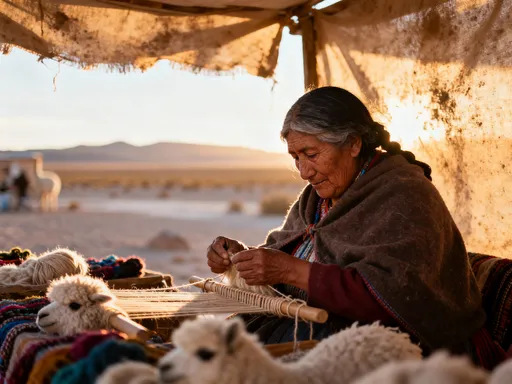
No symbol of Persian craftsmanship is more iconic than the hand-knotted carpet, and Isfahan is one of its most revered centers. But to truly appreciate these textiles, one must go beyond the polished showrooms that line the main tourist routes. I ventured into a quieter neighborhood, where a family-run workshop hummed with quiet industry. Inside, women and men sat on wooden platforms, their fingers flying as they tied thousands of knots per square inch into wool and silk threads.
The head weaver, Fatemeh, explained that each carpet begins with a design drawn on graph paper — a grid that translates complex floral and geometric patterns into a code the weavers can follow. The patterns are not random; they carry meaning. Isfahan carpets often feature central medallions surrounded by intricate vines and blossoms, symbolizing the garden of paradise. Tribal designs, in contrast, might depict hunting scenes or animals in motion, reflecting a nomadic heritage.
What sets these carpets apart is not just the design, but the materials. The wool is hand-spun and dyed using natural sources: pomegranate rind for rich reds, walnut shells for warm browns, indigo for deep blues. The dyes are simmered in large copper vats, a process that can take days to perfect. The result is a depth of color that synthetic dyes cannot replicate — shades that shift subtly in different light, like living things.
Buying a carpet directly from such a workshop ensures that the artisans are fairly compensated and that traditional methods survive. In tourist markets, many carpets are mass-produced or imported, their origins obscured. But when you meet the people who made your carpet, when you see the calluses on their fingers and hear the pride in their voices, the object becomes more than decor — it becomes a story you carry home. I did not purchase a carpet during my visit, but I left with something more valuable: an understanding of the patience, skill, and cultural memory woven into every thread.
Saffron and Spice Culture: A Feast for the Senses
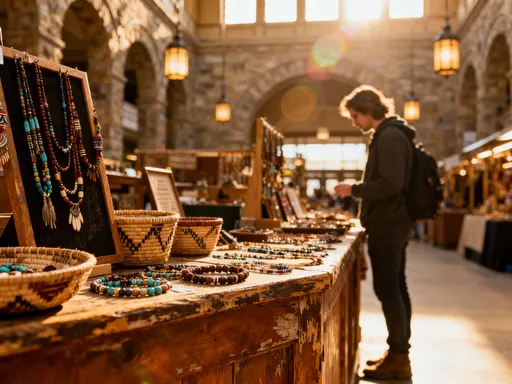
No journey through Isfahan is complete without a visit to its spice bazaars. Stepping into the covered market near the Jameh Mosque is like entering a living apothecary. The air is thick with the warm scent of cumin, the sharp tang of dried lime, and the sweet, honeyed aroma of saffron — the world’s most expensive spice, grown in the nearby fields of Khorasan. Rows of stalls overflow with colorful powders and threads, each with its own history and use.
I spent an afternoon with a vendor named Ali, who has spent forty years behind the same counter. He showed me how to distinguish real saffron from imitations — true saffron threads are deep red with a slight orange tip, and when soaked in warm water, they release a golden hue without dissolving. He let me smell a sample: “Real saffron should smell like honey and hay, not metal,” he said. “If it smells sharp, it’s fake.” He then brewed a small cup of saffron tea, its golden warmth spreading through me like sunlight.
Saffron is more than a spice in Iran; it is a symbol of generosity and celebration. It flavors rice at weddings, sweetens desserts during Nowruz, and is offered to guests as a sign of welcome. The harvesting process is labor-intensive — each crocus flower produces only three stigmas, which must be hand-picked at dawn before the sun wilts them. It takes about 150,000 flowers to produce one kilogram of saffron, which explains its high value.
Ali encouraged me to buy a small pouch, not as a souvenir, but as a way to bring a piece of Iranian daily life into my kitchen. “Cook with it,” he said. “Share it with family. That is how culture lives.” I followed his advice, and now, whenever I use saffron, I remember the warmth of his stall, the golden light filtering through the bazaar’s skylights, and the quiet pride of a man who has spent a lifetime honoring a single golden thread.
Ceramics with a Legacy: The Blue of Isfahan
The skyline of Isfahan is dominated by domes of shimmering turquoise, a color so vivid it seems to glow from within. This iconic hue is not just architectural — it is a reflection of the city’s deep ceramic tradition. In a modest studio tucked behind the Ali Qapu Palace, I met Karim, a potter whose family has worked with clay for over 200 years. His workshop is small, lit by natural light, with shelves lined with unfired pots, hand-painted tiles, and delicate vases.
Karim uses a foot-powered wheel, just as his ancestors did. The motion is rhythmic, almost meditative. He centers the clay with practiced hands, then slowly raises the walls of a bowl with gentle pressure. “The wheel listens to your breath,” he told me. “If you are tense, the clay wobbles. If you are calm, it rises straight.” Once shaped, each piece is dried, hand-painted with intricate floral or calligraphic designs, and then fired twice — first to harden the clay, then again after glazing to achieve its signature shine.
The glaze itself is a closely guarded recipe. It begins with crushed quartz and copper oxide, mixed with water to create a liquid that transforms into that unmistakable Isfahan blue during firing. The process is unpredictable — slight variations in temperature or humidity can alter the final color. This is why no two pieces are exactly alike. “Each one has its own soul,” Karim said, holding up a freshly fired tile. “You cannot mass-produce beauty.”
I purchased a small hand-painted bowl, its surface adorned with a vine motif in cobalt and gold. It was not the most expensive item I could have bought, but it was the most meaningful. Every time I use it, I think of Karim’s hands shaping the clay, of the centuries of potters who came before him, and of a tradition that endures because someone, somewhere, still chooses to work slowly, with care.
Practical Tips for a Meaningful Slow Travel Journey
To truly experience Isfahan’s specialty crafts and culture, a shift in mindset is required. Forget the urge to see everything. Instead, focus on experiencing a few things deeply. This begins with how you plan your trip. Rather than booking a one-night stopover, consider staying for at least five to seven days. This allows time to settle in, to revisit places at different times of day, and to build small connections with locals.
Accommodation plays a key role. Opt for a traditional Persian courtyard house, known as a khaneh, many of which have been converted into boutique guesthouses. These homes, with their central gardens, tiled fountains, and shaded verandas, offer a peaceful retreat and a glimpse into historic domestic life. Meals are often shared with the host family, providing natural opportunities for conversation and cultural exchange.
When visiting workshops or markets, arrive early in the morning or later in the afternoon, when crowds are thinner and artisans are more relaxed. Approach with curiosity, not just commerce. Ask questions — many artisans speak some English and are eager to share their knowledge. A simple “How long does this take to make?” or “What does this pattern mean?” can open a meaningful dialogue.
Respect is paramount. Avoid aggressive bargaining, especially in small studios where prices are already fair. Remember that you are supporting a livelihood rooted in tradition. If you are invited into someone’s workspace or home, accept with gratitude. Bring a small gift if possible — something from your own country, like tea or a postcard, can go a long way.
Finally, leave room in your schedule for the unexpected. Some of my most memorable moments in Isfahan happened when I had no plans: a chance encounter with a calligrapher in a tea shop, an invitation to watch a carpet being washed in a courtyard, a spontaneous walk along the Zayandeh River at sunset. These unplanned moments are not distractions — they are the essence of slow travel.
The Deeper Value of Traveling Slow
Isfahan changed the way I think about travel. Before, I measured trips by how many sites I visited, how many photos I took, how efficiently I moved from one place to the next. Now, I measure them by depth — by the conversations I had, the skills I observed, the quiet moments of connection that cannot be captured in a snapshot.
Slow travel is not about luxury or indulgence. It is about intention. It is choosing to spend an hour watching a potter shape clay instead of ticking off another mosque. It is sitting with a carpet weaver and learning the meaning behind a floral pattern. It is sipping saffron tea with a vendor who treats you like family. These experiences do not fill a checklist — they fill the heart.
The specialty crafts of Isfahan — the miniatures, the carpets, the ceramics, the spices — are not just products. They are expressions of identity, resilience, and cultural continuity. Each one carries the weight of history and the hope of preservation. When we engage with them slowly, respectfully, and thoughtfully, we become part of that story.
In a world that glorifies speed, constant movement, and instant gratification, choosing to travel slowly is a quiet act of resistance. It says that some things are worth time, that beauty requires patience, and that understanding grows not from rushing, but from staying. Isfahan taught me that the richest travel experiences are not found in how far you go, but in how deeply you see. And when you return home, you don’t just bring back souvenirs — you bring back a changed perspective, a deeper appreciation for the human hands that shape our world, and the quiet wisdom of a city that knows the value of taking its time.